SWLAW Blog | Faculty Scholarship Spotlight
August 21, 2026
Faculty Scholarship Spotlight: Professor Richard Lorren Jolly
Our second "faculty spotlight" shines on Professor Richard Jolly. Professor Jolly joined the Southwestern faculty in 2021, earning tenure in 2025. Before joining Southwestern, Professor Jolly served as a judicial law clerk for the Honorable Deborah Cook on the U.S. Court of Appeals for the Sixth Circuit, he was a Research Fellow for the Civil Jury Project at the NYU School of Law, and he worked as a Litigation Associate at the Los Angeles law firm Susman Godfrey. In just five years as a legal academic, Professor Jolly has developed a national reputation as an expert in the civil justice system with a particular emphasis on lay participation in judicial decision-making through jury service.
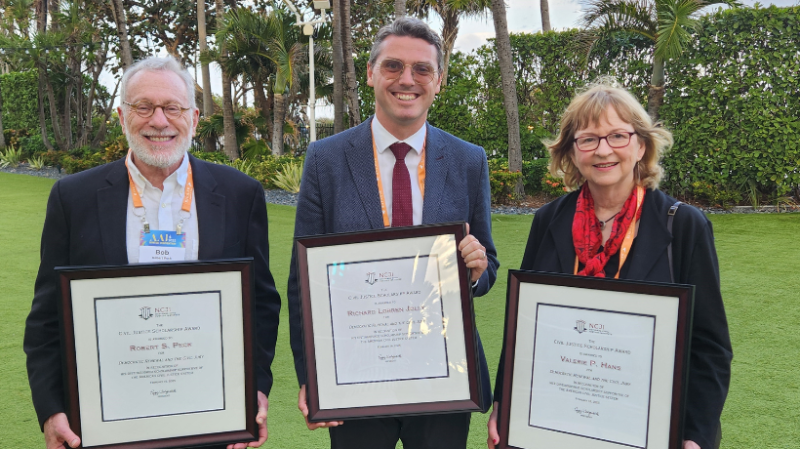
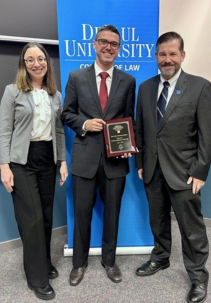
In 2025, Professor Jolly and his co-authors were selected as one of two winners of the Civil Justice Scholarship Award, bestowed by the National Civil Justice Institute to recognize "outstanding legal research that enhances public understanding of civil litigation." For the 2026-27 academic year, Professor Jolly was selected for the Clifford Scholars-in-Residence program at DePaul University College of Law, which "recognizes a talented rising star in the field of civil justice." As a Clifford Scholar, Professor Jolly delivered a public address at DePaul in April entitled, The Democratic Virtues of the Civil Jury. His thesis was that the purpose of jury trials is not merely to resolve individual disputes, but instead to cultivate essential democratic virtues—specifically, responsibility, practical wisdom, and civic equality—in the individuals who serve. Understood in this light, Professor Jolly urged that the central value of the jury is not producing in good verdicts but instead in producing good citizens.
Professor Jolly recently published an Article, Red Juries & Blue Juries, 57 Arizona State Law Journal 229 (2025), which examines the jury as an institution in light of modern partisan hyperpolarization. The Article reviews the history and underlying purposes of the jury as a democratic body, stressing that political biases are an inherent—and at times desirable—part of the institution. But, in drawing on extensive empirical socio-psychological scholarship, it demonstrates that today’s partisan polarization is so extreme that fresh approaches are necessary. In order to ensure procedural and substantive legitimacy, Professor Jolly argues that courts must be diligent in seeking partisan representation in venires and policing partisan partiality among jurors in all cases, not just those that are explicitly political. Critically, the Article concludes that potential jurors should not be excluded solely on the basis of political affiliation or past votes cast; the jury as an institution demands the voices of many in order to fulfill its role as the democratic bench of the judiciary. Professor Jolly modestly suggests that through jury service, the nation can start on a path toward reunification.
Later this year, Professor Jolly's next major Article, Overruling Batson, will be published in volume 112 of the Cornell Law Review. In this forthcoming piece, Professor Jolly promotes more democratically representative juries by demonstrating why the Supreme Court must explicitly overrule Batson v. Kentucky and its doctrinal progeny. Despite their laudable aims, these cases have proven entirely unworkable and unreliable in practice because they rest on egregiously wrong understandings of the common law and constitutional text governing peremptory challenges. Correcting these errors reveals that the constitutional right to peremptory challenges is asymmetrical: the Fourteenth Amendment prohibits state actors from exercising peremptory challenges at all, while imposing no restrictions on the bases on which the accused and private litigants can exercise such strikes. Returning to this original understanding need not relegate the jury back to its discriminatory roots or jeopardize representative juries. Instead, Professor Jolly urges courts to vigorously enforce and expand the Constitution's separate fair cross-section requirement that jury venires reflect the community, and states should take affirmative steps to remove barriers to participation. He thus concludes that overruling Batson would restore the Constitution's careful balance between securing representative juries and protecting the rights of the accused and private litigants.
What is the primary goal of your research and scholarship?
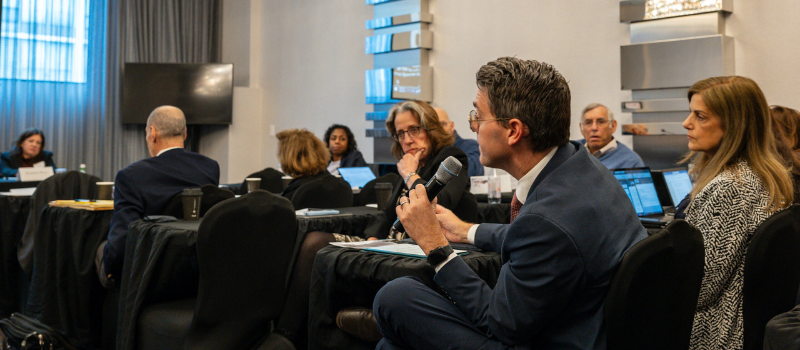
"The primary goal of my research and scholarship is to recover the position of the grand, criminal, and civil jury within the constitutional framework in order to ensure democratic participation within the judiciary. As part of this project, my research focuses on the historical foundations and socio-political significance of the jury across domains. But it is not merely theoretical. It seeks to tie historical and constitutional jury practices to concrete recommendations for revising jury procedures and reversing failed doctrines that courts can actually implement. And it stresses that in so doing, revival of our democracy more broadly can be realized."