"Cancel, Capture, Control": The Chilling Effect on Free Expression in the Digital Age

Event Details
November 12-13, 2026
Southwestern Law School Campus
3050 Wilshire Boulevard, Los Angeles, CA 90010
Free speech is the lifeblood of democratic self-governance and academic inquiry. Constitutional and human rights instruments—the U.S. First Amendment, Article 19 of the ICCPR, Article 10 of the ECHR—were designed to shield dissent and to keep ideas in circulation. In the Digital Age, however, technology, social dynamics, and market pressures have combined to discourage people from voicing what they actually believe, online and off. The chilling effect this produces is not a stray byproduct of legal doctrine. It is the predictable result of how power is distributed across law, markets, and culture, which together set the cost of expression.
Panelists
Keynote Speaker — Jessica J. González, co-CEO of Free Press
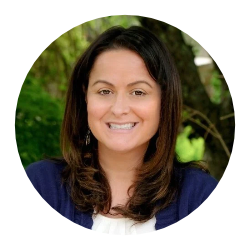 Jessica J. González is Co-CEO of Free Press and a public-policy attorney with two decades of experience advancing media reform, civil rights, and digital accountability. She regularly testifies before Congress and has appeared on CNN, NPR, and MSNBC. She co-led the Stop Hate for Profit campaign, which mobilized more than 1,000 advertisers to boycott Facebook, and the Stop Toxic Twitter campaign. A former Wasserstein Public Interest Fellow at Harvard Law School, she was named a 2025 Democracy Policy Fellow at UC Berkeley.
Alexandros Antoniou —Commercial Creator Speech and the Ecology of Chill
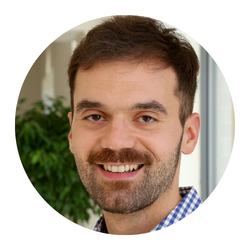 Dr. Alexandros Antoniou is an Associate Professor in Media Law. He researches influencer marketing, online safety, and intellectual property asset management. His work in these areas has been published in leading journals such as The Journal of Media Law, Communications Law, Entertainment Law Review and the Journal of Intellectual Property Law and Practice.
He is a Senior Fellow of the Higher Education Academy and a legal correspondent for the Council of Europe's European Audiovisual Observatory, contributing comparative legal intelligence for regulators and rights-holders across 40+ countries.
Salman Mufelh R. Al-Kahtani — Delegated Discretion, Automated Chill: Civil Liability, AI Agents, and Corporate Gatekeeping in U.S. and Saudi Arabia Law
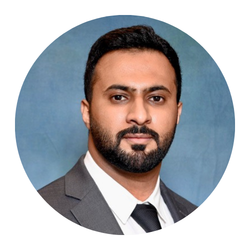 Salman Mufleh R. Al-Kahtani is Vice Dean for Development and Quality and Assistant Professor of Law at the College of Law and Political Science, King Saud University, where he teaches and researches in private law, with a focus on contract law and civil liability. He also serves as legal counsel to the University’s General Administration of Legal Affairs and advises other entities and clients on a range of legal matters. His current research examines the legal implications of artificial intelligence, including corporate liability for autonomous AI agents and the role of private actors in digital governance.
Dr. Al-Kahtani holds an S.J.D. from Indiana University Maurer School of Law, an LL.M. from the University of Florida Levin College of Law, and an LL.B. from King Saud University.
Matheus Coelho da Silva — Chilling Speech Across Borders: Platform Regulation, Judicial Orders, and Freedom of Expression in Brazil and the United States
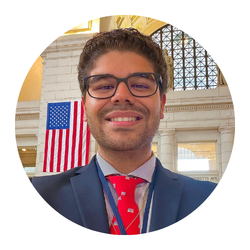 Matheus Coelho da Silva is a Brazilian attorney working at the intersection of corporate law, succession and wealth planning, and Brazil–U.S. cross-border matters. His professional and academic interests include comparative law, international legal practice, and the relationship between Brazilian and U.S. legal institutions. He has developed an international academic and professional background through programs and initiatives in the United States and Europe.
Mr. Coelho da Silva’s current research examines freedom of expression, digital platform regulation, and judicial approaches to online speech in Brazil and the United States. He is admitted to practice law in São Paulo and Pará, Brazil.
Marius Dragomir — Answer Capture: AI Gatekeepers and the New Chilling Effect on Public Interest Journalism
 Marius Dragomir is an award-winning media and journalism scholar specializing in media regulation, digital policy, public broadcasting, and media ownership. He currently serves as the Director of the Media and Journalism Research Center (MJRC) and is a researcher at the University of Santiago de Compostela in Spain. Additionally, he works as a professor and has taught at the Central European University (CEU) in Vienna, where he previously directed the Center for Media, Data and Society.
Dragomir spent over a decade with the Open Society Foundations (OSF) in London, managing the research and policy portfolio for the Program on Independent Journalism. During his tenure, he served as a primary editor and writer for global research initiatives, including "Mapping Digital Media”, which evaluated media environments across 56 countries, and "Television Across Europe," a comparative study on broadcasting policies.
In recognition of his extensive academic contributions and rigorous analysis of regulatory frameworks, Dragomir was honored with the 2025 European Media and Democracy Karol Jakubowicz Award.
Sarah Klim — Manipulated Speech Environments, Privacy Frameworks & First Amendment Concerns
 Sarah Klim is an Assistant Professor of Law at Mercer University School of Law, where she teaches Legal Writing I, Legal Writing II, and an Advanced Writing Group. Her research interests include international and comparative business law and data privacy.
Professor Klim holds a B.A. from Florida State University, magna cum laude, where she studied Creative Writing and earned a Certification to Teach English as a Foreign Language. She earned her J.D. with a concentration in Transactional Practice from Boston University School of Law, where she served as a 2L Editor of the Review of Banking & Financial Law and competitor in the Homer Albers Prize Moot Court Competition. She also holds an L.L.M. in International & European Business Law from the Comillas Pontifical University (ICADE) of Madrid, where she earned an Award for Excellence (recognizing the highest GPA in the 2021-2022 LLM program).
In 2026, Professor Klim presented a paper at the Forum on Privacy and Government Transparency in Budapest, Hungary. She has worked at the U.S. Court of Appeals for the First Circuit in Boston, Massachusetts, and served as a Commercial Litigation Attorney representing Fortune 500 companies in complex business disputes at a major law firm in Miami, Florida.
András Koltay — The Application and Problems of the “Chilling Effect” Doctrine in the Case Law of the European Court of Human Rights—With a Comparison to US First Amendment Law
András Koltay is Research Professor at the Ludovika University of Public Service and Professor of Law at Pázmány Péter Catholic University in Budapest, Hungary. He received LL.M. degree in Public Law at the University College London in 2006, and PhD degree in law at the Pázmány Péter Catholic University in 2008.
Between 2018 and 2021, he served as Rector of the Ludovika University of Public Service. He has been the Head of the National Media and Infocommunications Authority of Hungary between 2021 and 2026.
His principal research has been concerned with freedom of speech and the press, media regulation and platform law. He was a speaker in more than 250 conferences in several countries. He is the author of New Media and Freedom of Expression (Hart, 2019) and Media Freedom and the Law (Routledge, 2024).
He is the co-editor of Blasphemy and Freedom of Expression (Cambridge University Press, 2017, together with Jeroen Temperman), Comparative Privacy and Defamation (Elgar, 2020, together with Paul Wragg), Global Perspectives on Press Regulation, Vol. 1 and 2 (Hart, 2023 and 2024, together with Paul Wragg) and Disinformation, Misinformation, and Democracy (Cambridge University Press, 2025, together with Ronald J. Krotoszynski, Jr. and Charlotte Garden).
Eka Nugraha Putra — Curbing Lies or Chilling Speech? An Examination of Anti-Misinformation and Disinformation Regimes in Asia
 Dr. Eka Nugraha Putra is a Research Fellow at the Centre for Trusted Internet and Community (CTIC) at the National University of Singapore (NUS). He works on how regulations and policies influence the supply and demand of digital information in a research project entitled "Digital Information Resilience: Restoring Trust and Nudging Behaviours in Digitalisation" .
Dr. Putra is the author of the book Free Speech in Indonesia: Legal Issues and Public Interest Litigation (Routledge). He was also selected as an International Research Fellow at the Information Society Law Centre at the University of Milan, Italy.
Dr. Putra received a Fulbright Scholarship and an AIFIS–Luce Fellowship for his research entitled "Criminal Defamation and Free Expression in the Digital Age."
Judith Townend — The “Gendered Chill”: Examining Lawfare Against Women Through a Socio-Legal Lens
 Judith Townend is a socio-legal researcher and Reader in Digital Society and Justice in the School of Law, Politics and Sociology (LPS) at the University of Sussex. Professor Townend a co-director of Sussex Digital Humanities Lab. She holds visiting research fellowships at the Institute of Advanced Legal Studies and the civil society organization Connected by Data.
Dr. Townend’s research focuses on public access to information, the protection and regulation of public interest journalism, and broader issues of freedom of expression. Her work on media, communications and information law is interdisciplinary and uses socio-legal methods and approaches from the social sciences and humanities to understand legal and policy developments.
Her recent projects have looked at the charitable funding of journalism; open justice / access to justice system data; and the protection of journalistic sources and whistleblowers. She is co-author of Observing Justice (2023, Bristol University Press, with Lucy Welsh) and co-editor of Media Power and Plurality (Palgrave Macmillan, 2015, with Steven Barnett), and writes for a range of academic journals and media publications.
- Schedule
Thursday, November 12
6:30 p.m.
Arrival
7:30 p.m.
"A Conversation With" Jessica J. González, co-CEO of Free Press.
8:30 p.m.
Reception and Biederman Institute Celebration
Friday, November 13
9:00 a.m.
Breakfast
9:30 a.m.
Welcome Remarks
Professor Michael M. Epstein9:40–10:00 a.m.
Alexandros Antoniou
Commercial Creator Speech and the Ecology of Chill10:00–10:20 a.m.
Salman Mufelh R. Al-Kahtani
Delegated Discretion, Automated Chill: Civil Liability, AI Agents, and Corporate Gatekeeping in U.S. and Saudi Arabia Law10:20–10:40 a.m.
Marius Dragomir
Answer Capture: AI Gatekeepers and the New Chilling Effect on Public Interest Journalism10:40–11:00 a.m.
Coffee Break
11:00–11:20 a.m.
Judith Townend
The “Gendered Chill”: Examining Lawfare Against Women Through a Socio-Legal Lens11:20–11:40 a.m.
András Koltay
The Application and Problems of the “Chilling Effect” Doctrine in the Case Law of the European Court of Human Rights—With a Comparison to US First Amendment Law11:40 a.m.–12:00 p.m.
Eka Nugraha Putra
Curbing Lies or Chilling Speech? An Examination of Anti-Misinformation and Disinformation Regimes in Asia12:30–1:40 p.m.
Working Lunch
Technology-Driven Speech Environments: Is the Chilling Effect About to Get a Lot Chillier?
Participant discussion led by Michael M. Epstein1:40–2:00 p.m.
Sarah Klim
Manipulated Speech Environments, Privacy Frameworks & First Amendment Concerns2:00–2:20 p.m.
Matheus Coelho da Silva
Chilling Speech Across Borders: Platform Regulation, Judicial Orders, and Freedom of Expression in Brazil and the United States2:20–2:30 p.m.
Closing Remarks