SWLAW Blog | Events
October 29, 2026
Constitution Day Discussion Examines Shifting Balance of Power in American Democracy
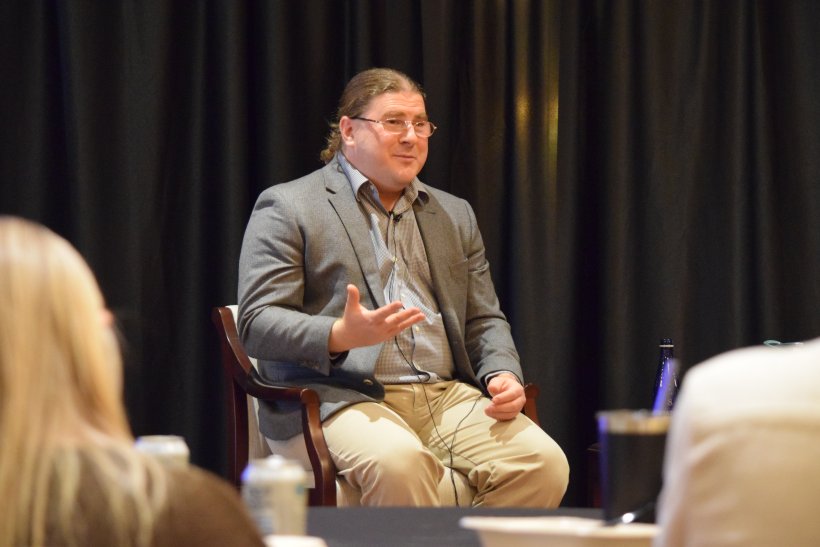
UCLA Law Professor Joseph Fishkin joined Associate Dean Luke A. Boso to discuss voting rights, campaign finance, executive power, and the Supreme Court.
“Congress is losing power.”
That was Professor Joseph Fishkin’s answer when Associate Dean Luke A. Boso asked him to identify the larger constitutional pattern connecting recent Supreme Court decisions.
During Southwestern Law School’s 2026 Constitution Day program, Fishkin argued that developments across voting rights, campaign finance, administrative agencies, and presidential power reflect a broader shift in authority among the branches of the federal government.
Fiskhin, a UCLA School of Law professor, began with partisan gerrymandering and Rucho v. Common Cause, the 2019 decision that removed partisan-gerrymandering claims from federal courts. The decision left elected officials to shape their own districts.“ The people are supposed to choose who represents them, not the representatives,” said Fiskhin. The result makes “it impossible for anyone else to win besides the incumbent.”
The conversation then moved to racial vote dilution and the Voting Rights Act, including the Supreme Court’s 2026 decision in Louisiana v. Callais. Fishkin described the Act as a “Second Reconstruction”—an effort by Congress to enforce political rights promised after the Civil War.
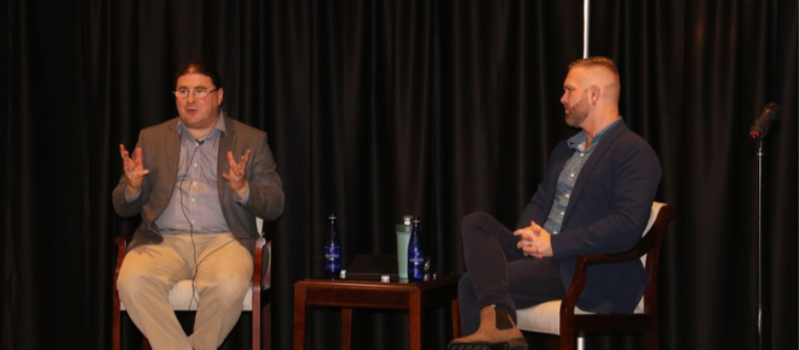
Campaign finance offered another example of the tension between congressional authority and constitutional limits imposed by the Court. Boso and Fishkin discussed Citizens United and this year’s National Republican Senatorial Committee v. Federal Election Commission, in which the Court struck down federal limits on political parties’ coordinated expenditures with candidates.
Fishkin traced the Court’s reasoning to a premise of its modern campaign-finance cases: “spending money counts as speaking.” He noted that the resulting doctrine has left Congress with limited ability to address disparities in political influence created by wealth.
Boso then turned to executive power and the administrative state, asking how decisions strengthening presidential control over executive agencies fit with rulings such as Loper Bright Enterprises v. Raimondo, the 2024 decision that overturned Chevron deference and shifted greater responsibility for interpreting federal statutes to judges.
Fishkin said the developments are connected. Some authority has moved toward the president, he argued, while the judiciary has simultaneously expanded its own role.
“The Supreme Court is giving itself fewer reasons why it should have to think twice or defer to any other branch,” Fishkin said. The result, he suggested, increasingly resembles what a colleague has called a “judicial-executive form of government”—notably leaving out Congress.
Yet Fishkin cautioned against viewing Congress as powerless.
“The kind of sleeping giant here is that Congress has a lot of legislative power that it hasn’t tried using in quite some time,” he said, pointing to congressional authority over federal elections and the structure of the Supreme Court.